
Cube Escape Collection
Rusty LakeAdventure
4.61.88K Reviews
- Version
- 1.4.13
- Installs
- 5.00M
- Age Rating
- Teen
Screenshots
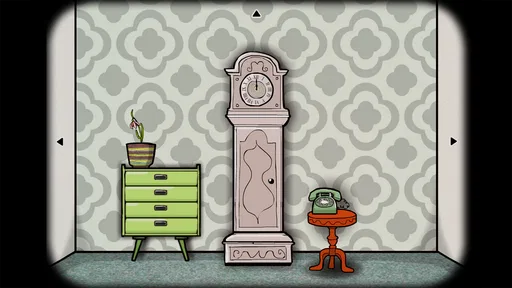
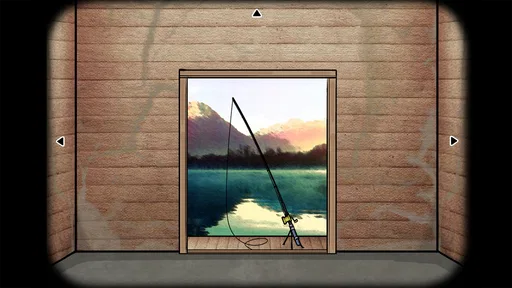
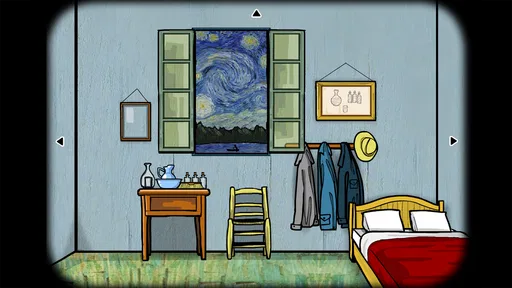
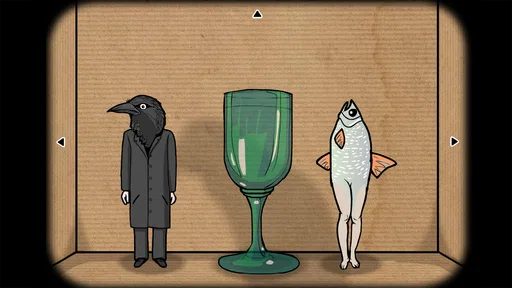
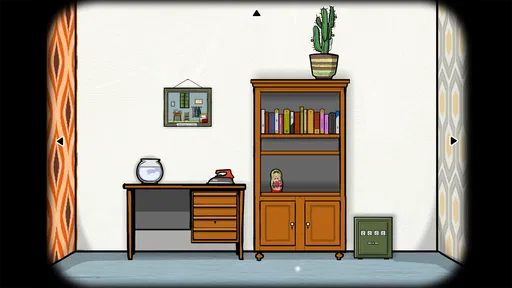
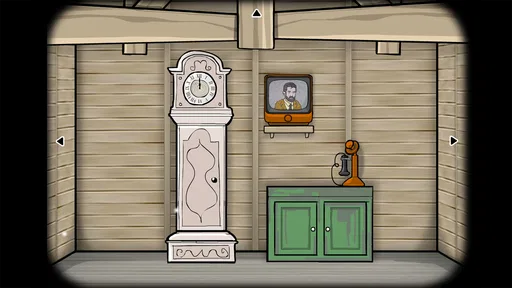
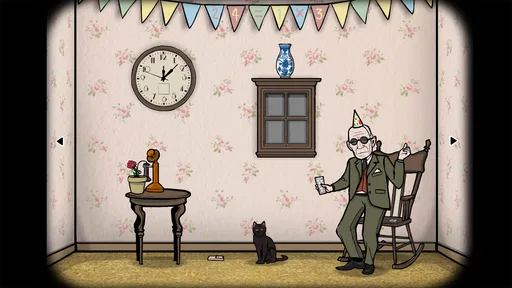
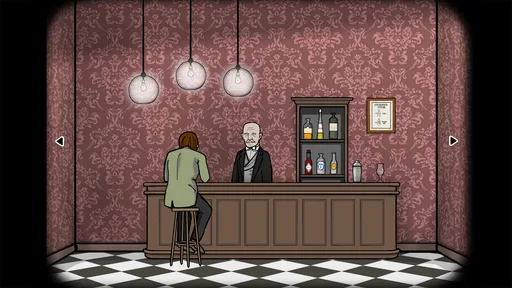
Our Review of Cube Escape Collection
 Analysis by Appyee
I went into Cube Escape Collection expecting a compact adventure game, but it feels more like a carefully arranged box of strange puzzles than a single straight journey. Rusty Lake uses quiet rooms, unsettling objects, and unusual characters to create a world that rewards attention rather than speed. The collection is free to start, carries a Teen content rating, and has already attracted a large audience, with a 4.6 average from around 64 thousand ratings and over 5 million installs.
What makes it interesting is the way it turns small discoveries into reasons to keep playing. You are not chasing a huge map or a long list of conventional missions. Instead, you examine a scene, notice something that seems slightly wrong, solve a puzzle, and suddenly understand how that action fits into the wider mystery. I found that rhythm much more satisfying than the usual adventure format, although it will not suit everyone. If you prefer constant movement, direct combat, or clearly explained objectives, this collection can feel deliberately obscure.
How the first goals pull you into the mystery
The early experience is built around observation. Rather than presenting a loud tutorial or filling the screen with instructions, the game places you in unsettling situations and lets the surroundings suggest what matters. A drawer, symbol, photograph, clock, or oddly positioned object may become important later, so I quickly learned not to treat background details as decoration.
That approach gives the opening puzzles a useful double purpose. They teach you how to inspect the environment while also establishing the tone of the Rusty Lake universe. The first goal is rarely just “find the next item.” It is closer to understanding how this particular world thinks. Objects can connect through visual clues, repeated patterns, and combinations that only make sense after you have tested several possibilities.
I liked that the collection does not depend on a conventional hero’s journey to create momentum. The motivation comes from unanswered questions. Why is this room arranged this way? What does a particular image mean? Why does an ordinary object appear in such an uncomfortable context? Those questions are enough to make a short play session feel purposeful.
One practical tip helped me immediately: I kept a small note of symbols, numbers, and unusual sequences instead of trusting my memory. The puzzles often ask you to connect information that appeared earlier, and writing down a clue prevents unnecessary backtracking. This is especially useful when you pause for a day and return without remembering the exact order in which you discovered everything.
The collection’s free entry also lowers the risk of trying this unusual style. It is not asking you to commit to a long role-playing campaign before you know whether the atmosphere works for you. You can sample the structure, decide whether the cryptic storytelling appeals to you, and then consider the optional in-app purchases, which are listed at $2.99 per item.
Progress is shown through discoveries, not power
There is no need to watch a character become stronger in the traditional sense. The meaningful progress is mental. You become better at reading the game’s visual language, recognizing when an object is a clue, and understanding that a solution may involve an earlier detail rather than the item directly in front of you.
That makes every solved puzzle feel like a small change in perspective. At first, I looked for obvious interactions. Later, I started checking the edges of scenes, comparing recurring imagery, and revisiting locations with a more careful eye. The game does not need a large progression screen to communicate advancement because the player’s growing understanding is the main unlock.
This is also where the collection differs from many casual adventure games. A typical mobile alternative may give you a chain of objectives, a bright marker, or a reward after every action. Here, the reward is often a new piece of context. You may open a route, reveal a disturbing image, or gain a clue that changes how you interpret an earlier scene. The result is less immediately reassuring, but more memorable when the connection finally lands.
I would not call the progression completely frictionless. Because the clues are often indirect, it is possible to spend several minutes examining the same area without knowing whether you missed an interaction or simply have not found the right idea yet. That uncertainty is part of the design, but it can feel like a lack of direction if you are used to games that confirm every correct step.
A useful workflow is to separate “I have not understood the clue” from “I have not found the object.” I first scan every visible item, then test combinations, and only after that return to the story details. This prevents random tapping from becoming the main strategy. It also makes the eventual solution feel earned rather than accidental.
The challenge curve rewards patience more than reflexes
The difficulty comes from interpretation, not fast reactions. You are generally being asked to notice relationships, remember information, and experiment with the logic of an unusual setting. That makes the game approachable for players who enjoy puzzle adventures but dislike time limits or action-heavy pressure.
At the same time, the collection is not always generous about explaining its rules. Some puzzles communicate their logic clearly once you see the pattern, while others require a leap in thinking. I occasionally reached the point where I knew the answer had to be nearby but could not tell which visual detail was meant to guide me. That is the main barrier for new players, especially those who expect every puzzle to follow familiar real-world logic.
The best way to handle a difficult section is to avoid trying every possible action in a hurry. I inspect the room in a fixed order, note anything that repeats, and ask what the game has recently emphasized. Repetition is often more useful than decoration. If a shape, color, or image appears more than once, I treat it as a possible instruction rather than background atmosphere.
Another non-obvious trade-off is that solving a puzzle can sometimes reduce the immediate mystery while increasing the larger one. You may understand how to open something without understanding why it matters. Players who need a clear narrative explanation after every challenge may find that unsatisfying. I enjoyed it because the unanswered elements gave me a reason to continue, but I can also see why someone might prefer a more direct story.
For an everyday scenario, this works well as a quiet evening game. I could play one section with headphones, stop after reaching a natural discovery, and return later without feeling that I had lost a competitive advantage. It is less suitable for a crowded commute if you are likely to be interrupted, because a missed visual detail can be more damaging than missing a few seconds of action in another mobile game.
Atmosphere creates retention without constant rewards
The collection keeps attention through curiosity rather than a stream of conventional prizes. There is no need for a loud celebration after every solved puzzle. The strange setting itself becomes the reason to continue, especially when a small detail hints that separate moments may belong to the same larger universe.
That kind of retention is slower and more personal than the loop used by many free mobile games. Instead of returning to collect routine bonuses or improve a character, I returned because I wanted to understand what the previous scene was pointing toward. The difference matters: the game asks for attention, not just repeated visits.
Still, the same design can create a retention problem. If a puzzle blocks you for too long, curiosity can turn into irritation. The collection does not always provide a comfortable middle ground between solving a clue independently and searching for outside help. I recommend giving yourself a short reset rather than immediately tapping through everything. Leaving the game and returning later often makes an overlooked pattern easier to see.
The individual experiences also benefit from being treated as parts of a larger mystery rather than isolated mini-games. I found myself remembering imagery from an earlier section and wondering whether it would become meaningful later. That creates a subtle reward for paying attention across the collection, even when the immediate puzzle seems self-contained.
Players should also know that the Teen rating reflects the game’s unsettling tone. The discomfort comes from the imagery, situations, and atmosphere rather than from the cheerful presentation found in many casual puzzle apps. I would not recommend handing it to a young child simply because the controls are simple. The mood is intentionally eerie, and that mood is central to whether the experience works for you.
Where it stands beside ordinary adventure games
Compared with a standard point-and-click adventure, this collection feels more concentrated. You are not wandering through a broad world filled with long conversations and extensive inventory management. The focus stays on compact environments, visual clues, and the tension between what you can see and what you understand.
Compared with casual escape-room games, it has a stronger identity. Many mobile puzzle alternatives are built around interchangeable rooms and familiar locks. Here, the setting and the story are inseparable from the challenge. The odd details are not merely decoration placed around a code; they help define the kind of logic you are expected to follow.
It is also a different choice from narrative games that offer branching dialogue or frequent character decisions. The collection’s storytelling is more indirect. You piece together meaning through scenes and discoveries rather than selecting from a large number of conversational responses. If you want to shape a protagonist’s personality, another adventure game may be a better fit. If you enjoy interpreting a world that refuses to explain itself completely, this is much more distinctive.
The collection is available for Android devices running at least Android 6.0, and the current version is 1.4.13. That makes it accessible to owners of older compatible phones, although the quality of a puzzle experience still depends on having a screen where small visual details are easy to inspect. On a cramped display, the very clues that make the game interesting can become harder to read comfortably.
Rusty Lake is a particularly important part of the appeal. The developer has built a recognizable universe rather than presenting a random set of unrelated puzzles. I would approach this collection as an entry point into that world, not merely as a disposable time-killer. The store summary describes it as a way to unlock the Cube Escape Collection and explore the mysteries of the Rusty Lake universe, but my impression is that its real strength lies in how the puzzles and atmosphere reinforce each other.
Who should play it, and who should skip it
I would recommend it to players who enjoy slow-burn mysteries, environmental clues, unsettling art direction, and the satisfaction of solving something without being told exactly where to look. It is especially good for someone who likes discussing theories after playing, because the unusual scenes invite interpretation beyond the immediate solution.
It is a weaker recommendation for anyone seeking a relaxed puzzle game with bright visuals and obvious answers. It may also frustrate players who dislike keeping notes, revisiting locations, or accepting that a solution can feel strange before it feels logical. The game’s challenge is not unfair simply because it is unusual, but its unusual logic will not appeal to every puzzle fan.
If you are deciding whether the optional purchases are worthwhile, I would first spend enough time with the free portion to judge the atmosphere and puzzle language. The important question is not whether you enjoy one isolated room; it is whether you like the way the collection withholds information and makes you assemble meaning yourself. Since each item costs $2.99, choosing based on that personal fit is more sensible than buying immediately because the overall concept sounds intriguing.
The large existing audience is encouraging, with more than 5 million installs and roughly 64 thousand ratings behind its 4.6 average. Those figures suggest that the unusual formula has found plenty of players, but they do not change the central point: this is a specific taste. Popularity cannot make cryptic puzzles feel less cryptic if you prefer direct guidance.
My verdict on the overall progression
After playing through its structure, I think the collection sustains interest through a strong chain of small goals. You begin by searching a room, continue by learning how its clues behave, and stay because each answer reveals another layer of the larger mystery. The progression is not about collecting power or completing a visible checklist. It is about becoming more perceptive.
The pacing works best when I treat each solved puzzle as a stopping point rather than rushing through everything in one sitting. That approach lets the atmosphere settle and gives the story’s odd connections time to remain memorable. It also reduces the frustration that comes from staring at one stubborn clue for too long.
There are genuine limitations. The indirect hints can leave you unsure whether you are missing an object or misunderstanding the intended logic. The eerie tone will be a poor match for players wanting something cheerful, and the collection offers less immediate feedback than mainstream mobile adventures. Those are not minor details; they define the experience.
Even so, I think Cube Escape Collection is a compelling recommendation for the right player. Rusty Lake has made an adventure game where curiosity is the main reward, and where progress feels personal because it comes from noticing more than you did a few minutes earlier. If you want a distinctive puzzle journey that values atmosphere, patience, and interpretation over speed, I would give it a try. If you need clear objectives and constant confirmation, choose a more conventional escape-room or story adventure instead.
Verdict
Strengths of Cube Escape Collection
- Ten atmospheric escape-room games in one convenient collection.
- Surreal storytelling rewards players who enjoy mystery and symbolism.
- Distinct puzzles and settings keep the individual chapters varied.
- Offline play makes it suitable for travel or limited connections.
- Simple controls work well on both phones and tablets.
Limitations of Cube Escape Collection
- Some puzzles are cryptic and may require trial-and-error.
- The unsettling themes may not suit younger or sensitive players.
- Later chapters can feel more demanding than the early episodes.
- Minimal guidance can make missed clues frustrating to identify.
- The collection offers limited replay value after solving each chapter.
Other Releases by Rusty Lake
View All
Rusty Lake Hotel
Adventure4.6

The Past Within
Adventure4.8

Rusty Lake Paradise
Adventure4.8

Rusty Lake: Roots
Adventure4.7
Similar Picks in This Category
View All
Roblox
Roblox Corporation4.2

Pokémon GO
Niantic, Inc.3.5

Ninja warrior: legend of adven
TOH Games4.6

Ninja Arashi
Black Panther4.6

Eyes - The Horror Game
Fearless Games sp. j.4.5

Critical Action:Gun Strike Ops
FPS Shooter & Action Game4.3
Frequently Asked Questions
What is Cube Escape Collection?
Cube Escape Collection is a point-and-click puzzle adventure compilation from Rusty Lake. It brings together several connected Cube Escape chapters in one package, including eerie locations, mysterious characters, surreal events, and story-driven investigations. Each episode uses simple tap controls, but solving it requires careful observation, combining objects, interpreting clues, and understanding the strange narrative that connects the Rusty Lake universe.
Is Cube Escape Collection free to play?
Cube Escape Collection is generally offered as a paid premium game, although availability and pricing can vary depending on whether you download it from Google Play or the App Store. Purchasing the collection usually provides access to its included episodes without the standard free-to-play structure, such as energy systems or frequent advertisements. Check the current store listing and regional price before downloading.
Does the game require an internet connection?
The main Cube Escape Collection experience is designed primarily as a single-player offline game, so you can normally play its puzzles without a constant internet connection after installation. An internet connection may still be needed for the initial download, updates, platform verification, or restoring a purchase. Because store requirements can change, it is worth checking the latest Android or iOS listing.
Is Cube Escape Collection suitable for children?
Although Cube Escape Collection uses simple controls and does not rely on action gameplay, it is not necessarily aimed at young children. The collection contains unsettling imagery, dark themes, mysterious deaths, psychological ideas, and occasional disturbing scenes. Older teenagers and adults who enjoy atmospheric puzzle adventures will probably appreciate it most. Parents should review the store age rating and content description before allowing younger players to download it.
How difficult are the puzzles in Cube Escape Collection?
The puzzles range from straightforward object-combination tasks to more cryptic challenges that require experimentation and close attention to visual details. Some solutions depend on recognizing patterns, reading environmental clues, or remembering information from another part of an episode. The game is generally approachable for newcomers to adventure puzzles, but a few moments can be intentionally obscure. Taking notes and inspecting every item carefully makes progress much easier.
Play our best games!


